Showing posts with label random table. Show all posts

Friday, July 31, 2026

Alternate Information Sources for RPGs

(This article is one of the backlog that piled up when I went off on a much needed vacation. As I slowly get back into blogging and prep for fall semester, I'll be working my way through these in addition to more NUNA, game design, Coyote & Crow, and Stormbringer posts)

In most RPGs, information on the adventure at hand comes from A Sage, a man in a tavern, a damsel in distress.

Ho hum.

These NPC dupes are always rife for manipulation or abuse, and are also overused and dull.

Here are few non-standard ways I use to get information across to the player. Also, some are quite cryptic, and I find that making players think more about the information gets more engagement than literal modes of communication.


1) WHAT DREAMS MAY COME

I used this a few years back in my Laughing Tower Stormbringer playtest, and the players really dug the vague images of slaughter and Chaotic mutation that were to come. Dreams can give snatches of a possible future, but should remain cryptic and not give too much away. They add colour or emotion to the adventure, a lot of which seems lacking these days.


2) PUPPET REGIME

In Frieren season 2, a puppet show is used to convey the historical background to their adventure. This is unsurprising in a Japanese anime, as in postwar Japan there was a tradition of Kamishibai (paper plays), where storytellers would go around on bicycle to city parks and give free entertainment while making money selling candy (details HERE). If the PCs need info, tell them in the square a puppeteer is putting on a play for kids (and selling candies to them), and that they can listen in. This breaks the GM and players out of the tiring pompous info dump mode and propels them into a more entertaining storytelling mode. Just get a few images together, make up a story with some clues and inconsistencies, and GO! Any GM worth his or her salt should enjoy themselves with a puppet play or kamishibai. In my Coyote & Crow game I had players make images before I did my kamishibai, and the engagement and fun was through the roof.


3) FAMOUS LAST WORDS

Another way to shake things up is have a dying character croak out their last words at the PC's feet. The upside is that players can't ask for further details, they just have to trust the words of someone on their last breath. Of course, in some games PCs may have revival magic or ways to speak to the dead, but once again GMs can have the ghost refuse to return, trapped by an evil presence, or so lost in the pain or peace of death that they aren't that helpful.


4) ODE TO A GRECIAN URN

What if the information the PCs need is inscribed on an urn or old tapestry? What if it is damaged and they need to find more pieces? And what if the visual message is so cryptic or oversimplified that they have to make their best guess as to what it means? I think lots of GMs want to control their information and make sure communication is flawless, but in this case, solving the mystery of the message is a huge adventure in and of itself. So let the need for control go, make or find a puzzling piece of art, and throw it at the players.


5) THE INFORMANT

For those of you into mystery or spy thrillers, having an informant that never meets directly but drops clues and information is a great way to keep players on their toes. The informant is always one step ahead, sending messages through lackeys, or in disguise, or any way that keeps them anonymous and safe. One issue is that you'll never know whose side they are truly on, or how they are subtly manipulating the PCs. In the Coyote & Crow scenario I ran here in Vancouver, the most liked NPC turned out to be the Big Bad at the end of the adventure. The players let out a collective 'WHOA!' when they realized it. It wasn't a fluke, I had planned the whole thing, but you can equally improvise a Kaizer Sose moment yourself to add depth to your game.


6) A LETTER

A letter from a lost or long dead person is also a poignant way to get information to players. Video games do this quite a lot. One thing to remember is that the letter writer is more interesting if they are an unreliable narrator, or write their narrative take that is at odds with the popular interpretation of events. It reminds me of The Last Ringbearer by Russian author Kirill Yeskov (1999), who reinterprets LotRs as heroic propaganda, and instead paints the orcs as working class people in a rationalist monarchy on the cusp of an industrial breakthrough that was destroyed by Gandalf and co. So if your orc den contains a letter by a survivng orc child that sounds like Anne Frank, you can really push your players' buttons.


7) BROKEN PALANTIR

Again from LotR, a piece of unreliable ancient tech is another great way to get unreliable messages across. If the PCs find a cracked orb or tainted ring, it could give them necessary hints but at a terrible price. It is definitely not to be trusted, admittedly useful, possibly manipulated by evildoers, and at some point may necessitate a quest to destroy it, but for the time being it get the job done.


8) PSYCHIC MESSAGES

Having a psionic NPC contact the player characters is also a great device, and was hinted at famously in the Conan story 'Tower of the Elephant.' Although REH does not come out and explicitly state that the elephant-headed Yag-Kosha is manipulating Conan, I always felt that Conan's curiosity towards the Tower might have been planted by the alien wizard. When Conan and the Wizard touch he gets full access to Conan's mind, So suddenly, pushing the barbarian towards the tower seems possible. Have vague psychic flashes are like the dreams above, but with the added payoff of possibly meeting the psychic at some point in the adventure.

Other ideas? Drop them in the comments.

Tuesday, May 5, 2026

Coins & Scrolls Reminder

Someone was asking me about OSR random tables that were all the rage in the 2010s. Reminded me of this blog, which has some incredible content (eating dungeon monsters table is my fave and a must for any fantasy campaign).

Happy reading!

Saturday, May 18, 2024

1920 Conversation Starters


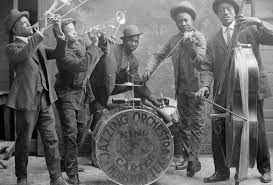
To get my players into the 1920 mindset, I did some research and made up this table of 1920 conversation starters.

Enjoy! 1920 Conversation Starters


1 What do you make of these ‘new women’? They got the vote, now they’re out all night dancing, bare ankles and arms. I’m all for it myself.


2 Y’know, I never even saw an automobile till the war. Now everyone has one. I can’t keep up with all the new makes and models.


3 Great time to be alive. You can’t lose on the stock market, new banks are popping up like mushrooms. It’s the start of a golden age!


4 Damn I could do with a drink! Who would have thought the crackpots would outlaw a stiff drink. After the war and wearing masks in the pandemic, we need a little diversion.


5 Have you heard this new music, what’s it called? Jazz! I bought my first radio now that they’re broadcasting


6 My new neighbors are blacks from down south. Nice folks, hard working, glad they got out of that place. We need more like them, not these communists coming from Europe!

Monday, April 24, 2023

About The Spellbook of The Mage You Killed...

 1 Tome goes up in flames

2 Tome goes sentient, flies around (as harpy, destroyed if HP zero)
3 Tome backfires as a curse shaped by the spell cast
4 Tome is sucked into a daemonic vortex, PCs trying to grab it must travel to hell and fight a suitable demon

5 Tome pages come apart with owner's death, each spell being a scroll that cannot be copied, only cast once

6 Tome becomes a Grimoire Golem (as Paper Golem) that either attacks any spellcaster nearby or wanders off to find one. The tome of any spellcaster killed by the golem becomes another golem.

7 Tome becomes a Spellbook Mimic (as Mimic but immune to magic) and gets a surprise attack on any trying to touch it

8 Tome is cursed, rewrites over the spellbook of any nearby magic user. If none are nearby, the ink oozes out and it becomes a useless wad of paper.

9 Tome sinks into ground, creating a magic funhouse dungeon with as many levels as the highest spell it held

10 Tome is locked by magic requiring a side quest to remove

Friday, July 10, 2020

About That Princess In The Tower... Random Table

I'm watching Doc McStuffins with little man.
There is a princess who doesn't want to be rescued, who wants to do everything a knight can.


I love it. Good for her!

It has inspired the following Random Table (staple of the old OSR)

About that princess in the tower, she's actually... (roll d10)

1 A hag, transformed into a princess but looking for a meal. Claw claw bite while looking gorgeous!
2 A wizardess just wanting to be left alone to research spells. Bug off or its magic missile time...
3 Seven dwarves, the princess is long gone. They could use some help clearing out their diamond mines, though.
4 Six petrified knights, the princess is long gone with lucky number seven. Find a way to unfreeze them and there might be a great reward, or big adventure.
5 A giant mimic in the shape of a tower, eats anyone who tries to enter. Use the stats of a big monster (purple worm?) and start rolling dice...
6 A real princess, but there's a one in a million chance one of you murder hoboes can wake her. Roll 7d10 ONCE, if they are all 1 then one of you is the lucky stiff. Wake her up and marry her and you're a king!
7 A hag, but with a heart of gold and looking for love. She'll play along until the wedding night, then confess her true form. She'll be a loyal NPC if loved, an adversary if scorned.
8 A princess, but she just wants to adventure and rescue people. Could she tag along and learn the ropes?
9 A prince, but wouldn't mind one of you handsome adventurers putting him over your shoulder!
10 An alien princess in silvery dress. When awoken, the exits shut, the tower rocks, spews smoke outside, then blasts off. Next stop, her planet! Time to start Googling Spelljammer...

Two more weeks of online teaching then I suppose I'll be shooting out at a decent speed again.

TED

Wednesday, January 23, 2019

Cyberpunk - Combat Environment

So I am re-watching the original Ghost in the Shell. It is epic. A masterpiece.


I just finished the first fight between the Major and the ghost using high velocity bullets. So many concepts (brain-wiped goons, throngs of people, abandoned quarters of the city) are crammed into this one sequence. More than that, the environment is depicted as a major factor in the combat, as it should be.


To replicate this in my games, I've brainstormed a few tables. A good GM should make a few rolls and determine the combat environment and interpret it for the players. Feel free to disregard or preroll conflicting entries (ie school zone billowing smoke, unless this fits your dystopic future).


SETTING TYPE

1 Sewer. Endless tunnels below the city, huge architecture, deafening echoes and running water, startling vermin.
2 Public transport. A monorail or subway, cramped quarters, good for taking hostages, or blowing up.
3 The docks. Boats and ships to jump between, deep ocean to fall into, sandbars to kung fu on.
4 The factories. Chimneys to climb or jump from, gantries to clomp across, chemical tanks to walk around or shoot holes in, pipes to hurdle or rupture.
5 The canals. Little boats to overturn, footbridges, knee deep water, fish swimming among rusty bicycles and consumer society detritus.
6 A shopping arcade. Shoppers to shove aside, displays to overturn, noisy pachinko parlours to run through, spilling hundreds of little balls behind you.
8 A park. Green spaces and trees to hide behind, civilians to scare or take hostage, duck ponds to splash through, fountains to blow up.
9 A residential area. Houses to barge into, stop signs to chop down or blow past, chest high concrete walls to leap or plough through.
12 Rows of concrete apartments. Roofs to leap between, exterior stairwells to climb on, cramped apartments to blunder through.
13 Parking lots. 50% either cars to crash into or duck behind and fire back from, or else heavy industrial vehicles, cranes and trucks that you can shimmy under or hunker behind.
14 School zone. Uh oh, kids gawking, police boxes on the corner.
15 Highway. Cars and trucks to dodge, or carjack, ramps to jump up or down to, good to parasail off of.
16 Traditional temple, shrine, or palace. Quiet, moss covered, dripping water and clacking bamboo pipes, perfect for silent showdown.
17 Private grounds of a corporation or embassy. Hedge walls, sudden sprinkler systems, security drones with machine-guns.
18 High rise building. Plexiglass to shatter, elevators shafts to fall down, climb up, or throw people into, boardrooms and reception desks to shoot up.
19 Laboratory or computer server room. Climate controlled, needs enviro-suits, fills with deafening alarms and security bots during a disturbance, blast doors also clamp down. Everything that happens is recorded on security cameras.
20 Air strip or space port. Big metal vehicles to hide behind or jump onto as they taxi for takeoff. Security forces arrive quickly - no one wants a terrorist incident.

SOUND (match to above environment or else roll 3d6 for random effect)

3 Deafening roar from machinery, vehicles, or people. Forget listen rolls, easy to get surprised or surprise.
4-5 Loud area, can't hear for shit. Communication only through yelling, gives away your position.
6-8 Loud enough. Can hear if enemy makes a big ruckus, otherwise as pervious entry.
9-12 Normal background noise. You might hear them if you stop everything and listen, then get a lucky roll.
13-15 Quiet. Failed listen roll gives you general direction, a success lets you pinpoint it.
16-17 Very quiet. You can hear each other easily, and pinpoint location with a successful listen roll.
18 You can hear a pin drop. You play cat and mouse game of listening to each other's movement, skulking about, then re-adjusting position before striking.

VISIBILITY  (match to above environment or else roll 3d6 for random effect)

3 Blind after a few inches from smoke, industrial particulate in air, or weather. Irritates eyes, giving a 25% penalty to rolls unless eye protection worn or implanted. Rely on other senses if possible.
4-5 Blind after a few meters / yards from smoke, industrial particulate in air, or weather. Irritates eyes, giving a 10% penalty to rolls unless eye protection worn or implanted. Rely on other senses if possible.
6-8 Intermittent visibility. Can sneak easily, invisible with a good roll.
9-12 Normal urban visibility. Can sneak with a good roll.
13-15 Normal visibility. Can hide with a good roll, hard to sneak about.
16-17 Clear visibility. Can hide with a good roll, hard to sneak.
18 Pure clarity. Everyone gets a 5% bonus to hit each other,

BYSTANDERS

3 Jam packed, can only inch forward, bystanders going to die if shooting starts, easy to blend into though.
4-5 Highly populated, you need to yell or push people aside to advance, but slows you by half.
6-8 Clumps of people milling about. You can run between people if you make an agility roll, otherwise as above.
9-12 Normal, people are witnesses, but not in the way.
13-15 Quiet, 50% chance 1-4 people are around if shit goes down.
16-17 Silent streets. Only 10% chance of a single guard or wanderer on scene when action happens.
18 Abandoned or cordoned off area. No one but us and them.

COVER AVAILABILITY

3 Nothing. Guess you have to stand and juke the shots and hope you get lucky first.
4-5 Shit all. Cover only if you crawl on all fours and hide.
6-8 Kiddie cover. You have to hunker down to get any protection.
9-12 Decent. You can stand and shoot leaning around corners.
13-15 Great. Lots of strategic places to get a good shot from if you take a minute to set up.
16-17 Cover cover everywhere. Alternately, hard to get a clear shot at anyone. Everyone has half cover automatically.
18 Too many places to hide and hunker down. Better use your ears to find your foe and sneak up on them.

COVER DURABILITY

3 Like tissue paper. May hide you, but won't stop a fly.
4-5 Cardboard paper. Might reduce damage if you're lucky, 10% chance.
6-8 Plywood or plastic. May stop the first shot from low caliber weapons, that's about it.
9-12 Wooden or thin metal. May stop the first shot from medium caliber weapons, reduce explosive damage by 1/10.
13-15 Stone. May stop the first shot from high caliber weapons, reduce explosive damage by 1/2.
16-17 Concrete. Reduces damage from heavy weapons, but with a chance of shrapnel.
18 Steel girders, perfect cover to reload or think behind.

SMELL

3 Sickening stench from abandoned garbage, or chemical smells from industrial process. Penalty of 10% to all rolls unless filtration (mask or internal) is available.
4-5 Fetid, penalty of 5% to all rolls unless filtration (mask or internal) is available.
6-8 Dirty city smells, but nothing you can't handle.
9-12 Normal city funk, you don't even notice it anymore.
13-15 Smells clean, like after a rain.
16-17 Pleasant aroma, cherry blossoms in spring or leaves in fall.
18 Clean air, a fresh day your nose will never forget. Small chance to sniff out something chemically, like machine oil or gunpowder.

ENEMY STRENGTH

3 Heavily armed and armoured. Power armour or mini-mech, military grade weapons do 1 shot kill damage. Need to use the terrain and your wits if you want to survive.
4-5 Cyber psycho, 2/3 or more cybernetic. Tough slog head-to-head, needs strategy and heavy weapons to bring down.
6-8 Cyberpunk, 1/3 or more cybernetic. Tough, but can be outwitted and outgunned.
9-12 Combat trained, one implant useful for combat, assault rifle or SMG. Typical guardsman or police officer.
13-15 Trained, fully human. Your gear and implants give you the advantage, but they might have numbers.
16-17 Fully human, but with minimal gear, bulletproof vest, 1-2 reloads. They come in numbers, can be sent packing with a show of force or brutality.
18 Puh-lease. Rent a cops or poser boys, low impact weapons with no reloads. Will run at the first sign of being outmatched.

RANDOM COLOUR

3 Mega passenger plane slides slowly overhead.
4 Giant billboards for old products stand rotting away.
5 Crowds of school kids in uniforms rush by.
6 Traditional festival parade marches by, people in loincloths chanting and lifting a portable shrine.
7 Robot vending machine starts its routine on PCs.
8 A 3 wheeled mini truck blares out advertisements for noodles, baked sweet potatoes, or recycling.
9 Motorcycle punks drive slowly by, revving engines, waving flags, and trying to make eye contact to start a brawl.
10 A politician on a speaker van drones on about his platform while commuters flash by unheeding.
11 A giant hologram Godzilla stomps by, bellowing out an ad for candy.
12 A crane stalks fish in a canal.
13 A line of taxis idles while drivers either sleep inside or chat while smoking.
14 Masked youth spray paint revolutionary slogans on the walls.
15 A riot police armoured bus drives by filled with cops in full gear.
16 Kids in VR helmets chase each other about shooting at each other with fingers and yelling ZAP! BEEYOW!
17 A homeless man with a cardboard sign sits staring at space.
18 A begging monk stands chanting, cup held out for donations, wicker hat obscuring his or her face.

Tuesday, November 21, 2017

Less Death More Story

Rereading The Hobbit, it strikes me that hardly anyone dies. The defeated heroes are instead captured by trolls, or spiders, or elves, or a friendly werebear. These throwaway characters end up having larger significance when you read Lord of the Rings where the elves of Lothlorien, the spider Shelob, and Tom Bombadil are used to expand on this story construct.


In other words, Tolkien often exchanges death for a story hook. Although Tolkien is cited as an inspiration for D&D, the lethality of early versions of the game and its rivals like Traveller point to a pulpier, more lethal origin. Player dissatisfaction with this high lethality in comparison to the fiction origins of the hobby have in turn led to a buffing up of character resilience in later editions and games.

However, at heart rpgs are about telling a story communally, and I think exchanging death for story hooks is a good way to accomplish this. Letting PCs cheat death in a way that complicates the story for good or ill is a practice that will reap unseen rewards in verisimilitude of and engagement in the game world. This realization has inspired me to create a table allowing characters to avoid death in favour of other story developments. This table can be used for any genre (except horror, where death has to be final), so I will give examples from Fantasy / Science Fiction / Adventure / and Supers gaming to help the GM flesh out the details in the context of their game.

Escaping Death!


When a character is felled in combat, roll 3d6 and consult the following table.

3 Taken! A powerful, intelligent foe takes the character from his or her vanquishers, necessitating a side quest to recapture them. The Demon / Alien Computer / Evil Warlord / World Destroyer may try to turn the PC against the party, or else use them as a hostage if cornered. Play a different character for the remainder of the session or until the reunited party returns to their base.
4-5 Taken! A powerful animal foe takes the character from his or her vanquishers. The roc / Alien Queen / dinosaur / Dimensional Hound may be saving the character to feed to their young or for impregnation. On the plus side, allies may track the character and attempt to save them from such a fate, and the GM may allow a character an appropriate roll to escape, but will be at half strength or life whether they escape or are rescued. Play a different character for the remainder of the session or until the reunited party returns to their base.
6-8 Being Delivered! The foes have you in chains but are delivering you to their god / leader / boss / mastermind. Your companions thus have a chance of tracking and rescuing you, but all your items will be shared out and used by your captors, complicating rescue. The character will be at half strength or life when  they are rescued. Play a different character for the remainder of the session or until the reunited party returns to their base.
9-12 Captured! The foes that vanquished you have you, but are keeping you alive for slave labour or trade. They are also willing to trade or sell you back to the party. The character will be at half strength or life whether they escape or are rescued.
13-15 Being Delivered! A group of allies helped you escape, but it will take time to return you to the party. Play a different character for the remainder of the session or until the reunited party returns to their base.
16-17 Saved! A powerful animal ally takes the character from his or her vanquishers. The unicorn / Star Baby / yeti / Dimensional Watcher may have saved the character unintentionally, or as a mysterious move in some game of larger forces.  On the plus side, allies may track the character and attempt to reclaim them, and the animal may even care for or protect the character if the GM allows a persuasion roll or a service is performed for them. Play a different character for the remainder of the session or until the reunited party returns to their base.
18 Saved! A powerful, intelligent ally rescues the character from his or her vanquishers and spirits them far away, necessitating a journey to return them. The Angel / Alien Computer / Freedom Fighter / Star God may try to turn the PC into their servant, or else expect the debt to be repaid in future. Players should use another character until theirs is reunited with the party.

Heroic Death


Yet even in Tolkien’s world, significant people die. Boromir. gives his life to warn his fellows and let Frodo and Sam escape. In a true story-centered rpg, death should be a choice that has major story repercussions.


If a player does not want to continue using the character that is defeated in combat, he or she can instead opt for a Heroic Death. A Heroic Death is one that has great significance, that benefits the party or the cause they work for. Players can only choose a Heroic Death when the party is in real peril, and can’t be used just when they succumb to unlucky rolls but others are safe. Choosing a Heroic Death trumps mechanics, it just allows a story effect negotiated by the player and GM.

Examples
You close the portcullis / airlock / tomb door / warp tube, allowing the others to escape the explosion.
You stop the monster / alien / cultists / assassin long enough for the others to get away.

You use your body to shield your fellows from the firebolt / laser blast / grenade / cosmic beams, allowing the others to achieve their objective.
You slay the last orc / robo-sentry / Nazi / cyborg and let the party move onto the McGuffin.

I'll definitely be trying this in the next session I run, especially if it involves old school lethality.

Sunday, June 19, 2016

Reanimating Lovecraft # 1 - HPL's Racism & Adding Moral Complexity to Call of Cthulhu

1 Racism & Call of Cthulhu

Howard Philips Lovecraft was a racist.

Even a cursory reading of his stories will produce evidence of his phobia of racial impurity and belief in white superiority. There is the infamous start of Call of Cthulhu:

The professor had been stricken whilst returning from the Newport boat; falling suddenly, as witnesses said, after having been jostled by a nautical-looking negro who had come from one of the queer dark courts on the precipitous hillside which formed a short cut from the waterfront to the deceased’s home in Williams Street.

Lovecraft scholar TS Joshi has commented on this bigotry many times, and HPL's bust was removed from the World Fantasy Awards because of this. A Google search of racism + lovecraft spools out innumetable articles and blogposts such as THIS.

So, point taken and cased closed, right? This doesn't mean we should stop reading his stories, which have morphed into a cultural property that has outlived their creator and his bigotry. For this same reason, Call of Cthulhu is still highly playable, with the prewar setting offering the complex moral dilemnas of the pre-Civil Rights struggle era.

Except that many games of CoC I've played in or run have been set in a pasturized past, an idyllic 1930s where color matters not, and the Good Guys band together to Save the World.

Not only is this the antithesis of the Mythos stories, it is a lost roleplaying opportunity.


2 Race, Class, & the Mythos

Roleplayers, due to the hobby's origin in the black & white moral alignments of D&D, naturally adhere to the polarity of good society versus evil monsters. In Call of Cthulhu, however, things should not be so cut and dried.

Logically, mythos creatures don't care or can't see human difference. Black, white, upper class, labourer, all taste the same to Cthulhu's idiot maw. Some creatures are merely entities stranded on an alien world, only dangerous when people rile them.

Looked at another way, cults are the ultimate Equal Opportunity Bureau. They employ any race or colour, especially those marginalized by White Society. They promulgate freedom of assembly and speech, and are free from the Victorian or Puritan sexual mores that constrain American society.

Conversely, it is the authority figures of White Society who put gay people and independent-minded women into mental institutions. They are the ones sending police into break up assemblies of people based on colour or ethnicity.

In CoC games, this complex moral landscape is too often 'flattened' to focus on the investigators vs monsters element. This reduces gameplay to a monster-of-the-week format, ironically at odds with the advice of Sandy Peterson and other CoC creators, and closer to the dynsmic of D&D in practice.

Here's how to reinject moral complexity into Call of Cthulhu.


3 Adding Moral Complexity to CoC

I suggest that flipping the 'good guys' or 'calvary' hiring or otherwise offering to aid the investigators is the quickest and surest way of recomplicating the moral landscape of CoC. Roll on the following table when PCs interact with authority. Note that there is a 50/50 chance of authority figures either openly show or hide their true nature, but even hidden allegiences should be easily uncovered by determined investigators.

1 National Socialists - In other words, these guys are American Nazi Partyers, intent on promoting American values by limiting immigration to the 'right types'. This movement was accepted by many Americans until Hitler gave it a bad name. This means that in prewar games, any mythos devices or power they obtain will make their way to Berlin.
2 Virulent anti-semites - not as political as Nazis, but equally vile. They will downright refuse to listen to, hire, or aid Jewish investigators. As above, any mythos devices or power they obtain will make their way to Berlin. Ironically have a ten percent chance of having Jewish ancestors.
3 Slavery apologists - deluded and dangerous believers that enslaving one's fellow man is a god given right. They will hire black people who keep quiet and work, but will refuse to listen to or treat them as equals, and abandon them if things go sour. Any mythos devices or power they obtain will make their way to KKK headquarters. Ironically have a ten percent chance of being racially mixed with black ancestors.
4 Misogynists - These people believe the Women's Right Movement is destroying America, and that women are better off at home. They will downright refuse to listen to, hire, or aid female investigators. Any mythos devices or power they obtain will make their way into the hands of suffragette breakers, domestic abusers or pimps. Ironically have a ten percent chance of being conservative women policing their own sex.
5 Homophobes - They will downright refuse to listen to, hire, or aid openly gay or lesbian investigators. Any mythos devices or power they obtain will make their way to  leaders of churches or public morals committees for use in anti-gay pogroms leading to incarceration or the mental hospital. Ironically have a ten percent chance of being closeted by social or family pressure.
6 Unforgivingly classist - These guys insist people should 'know their place' in society. They can trace their own bloodline to nobility, and only fraternize with people of the same class, of equal or higher EDU or occupational status. PCs with lower EDU or working class occupations will be ordered about and abandoned if things go sour. Any mythos devices or power they obtain will be used behind the scenes to maintain the status quo and stymy democratic reform or equality measures. Ironically have a ten percent chance of being from the lowest class of society.
7 Condescending imperialists - military or political types who go on about the civilizing nature of white culture and the barbarity of all others. See non-Eoropean peoples as inferior and treat as servants. Any mythos devices or power they obtain will make their way to the army unit or trading company at the head of a current imperialist adventure in Asia, Africa, South America, or Oceania. Ironically have a ten percent chance of being of mixed race.
8 Nothing! These people are refreshingly unburdened by prejudices or hang ups. Expect them to be killed, transferred, or be replaced with one of the bigoted types above.

Flipping the allegience of anti-mythos authorities should provide lots of dilemnas and roleplaying fodder. Investigators should hesitate to get assistance from Nazis for fear of the McGuffin falling into the wrong hands; players of female characters will be frustrated by patriarchal benefactors who refuse to let them participate fully in the investigation; and players should feel the judgmental glare of NPCs on their character's social standing, race, class, and sexual identity.

Optionally, you could also re-interpret the motives of the cultists to avoid the evil cult cliche, where 'cultist' is shorthand for 'killable without remorse' .

1 Hereditary - Brought up in the Old Faith, these people do what they do out of ritual and habit. Showing them the consequences of their faith may persuade them to give it up.
2 Misguided - Like the above, but mistakenly believe their faith does good. Maybe they see Nyarlothep as Space Jesus, or Cthulhu as the biblical Kraken. Either way, there is a chance that revealing the true form of their deity will cause them to renounce it.
3 Secret protectors - These people know about the mythos and collect its totems to keep them from returning to the world. Their policy of working in secret makes them easy to misunderstand, and they often work in direct opposition to the authority of White Society introduced above.
4 Fakers - They don't believe in any of the rituals or tenets of the faith, but are just in it for kicks. As above, revealing the consequences or true nature of their faith may dissuade them from it.
5 Occultists - Seances and mesmerism were their 'gateway drug', but now they year for magic that truly works. As above, revealing the consequences or true nature of their faith may dissuade them from it.
6 Academics - After decades collecting and studying mythos tomes, these searchers of knowledge have graduated to applying the scientific method to invocations and summonings of things best left unknown. As above, revealing the consequences or true nature of their faith may dissuade them from it.
7 Impoverished underclass - Dominated historically because of racial struggle, these people have been relegated to the precarious edges of society and seek mythos power and aid to redress their plight. As above, revealing the consequences or true nature of their faith may dissuade them from it, or may embolden them to gain more knowledge or power to overthrow their oppressors.
8 Stereotypical cartoonishly evil - Mad megalomaniacs without rhyme or reason. Fire away!


4 Why Bother?

You might well ask why bother adding this layer of moral complexity to your games. If you really don't see any value in this, if you really are satisfied with men-vs-monsters, then carry on. There is nothing wrong with your preferred style of gaming.

However, if you find CoC often devolving into cartoonish Scooby Doo style adventures, you might want to give this a try. The promise of roleplaying is to immerse us in life experiences that are usually closed to us. By setting these in a morally complex universe, we exercise our empathy and understanding of other people.

Sunday, July 27, 2014

Japanese Treasures – Omikuji fortunes


 It has been a month straight from hell. Making and giving semester-end tests, now grading, with a PhD deadline looming over my head in 10 days and smouldering homefires. I expect to crank out a few more posts and (gasp!) actually get out to a game soonish, so hopefully that will take the pressure off.

Here's a little bauble to get me back in the groove and shake up your Japan-themed game.

OMIKUJI FORTUNES


Every shrine and temple in Japan sells ‘omikuji’, fortunes or predictions written on pieces of sacred paper. You go to the temple wicket, pay a coin, then a monk hands you a carved wood cylinder with a pinhole at the top. You give the cylinder a good shake, then turn it upside down until one metal rod of the many inside slides out of the pinhole. The rod has markings on it, which the monk inspects, then he turns to a great cabinet of boxes behind him, opens the appropriate drawer, and hands you the rolled up omikuji. After reading your omikuji, tie it to a tree or line strung between trees on the temple grounds and pray that it either comes true if good, or that it doesn’t affect you too much if bad.

The omikuji first explains your general luck, with each level giving a different effect for the remainder of the day, session, or adventure as the DM sees fit. The following are suggestions, and DMs should feel free to tailor the bonuses or penalties to match the game as they run it.

OMIKUJI RESULTS (Roll 3d6)

3 大吉 - Daikichi - Excellent luck (Immediately go gamble and buy lottery tickets)
The character rolls two dice for all rolls and takes the best result. The character can also have one Save vs. Death against a normally unavoidable misfortune. Alternately, one ‘lucky’ thing may happen to further the plot of the adventure.

4 - Kichi - Good luck
The character rolls two dice for all rolls and takes the best result.

3 中吉 - Chukichi - Fair luck
The character gets + 1 to all rolls.

4 小吉 - Syokichi - A little luck
The character gets + 1d4 to one roll type of his choice. Examples include attack, damage, saves, or skill rolls.

5-6 半吉 - Hankichi - Semi-good luck
The character gets + 1 to a roll of her choice. Examples include an attack, one weapon damage, one type of save, OR a certain skill roll.

7-8 末吉 - Suekichi - Uncertain luck
The character can reroll one failure, but does not have to take the new roll.

9-10 末小吉 - Suekokichi - Uncertain but a little luck
The character can reroll one failure, but has to take the new roll.

11-12 - Kyou - Bad luck (Misfortune)
The character gets – 1d4 to a roll chosen randomly. Examples include an attack, one weapon damage, one type of save, OR a certain skill roll.

13-14 小凶 - Syokyou - A little misfortune
The character gets – 1 to a roll of the DM’s choice.

15-16 半凶 - Hankyou - semi-misfortunate
The character gets – 1 to all rolls.

17 末凶 - Suekyou - Uncertain misfortune
The character rolls two dice for any rolls and takes the worst result.

18 大凶 - Daikyou - Certain disaster (consider buying a karmic life insurance policy)
The character rolls two dice for any rolls and takes the worst result. The character must also make one Save vs. Death to avoid one random dangerous or deadly event. Alternately, one ‘jinxed’ thing may happen to obstruct or derail the plot of the adventure.

SPECIFIC FORTUNE RESULTS (Roll 1d10)


Besides general luck, an omikuji also gives you a specific detail of your fortune. Note that good effects apply only to the owner of a good omikuji, while bad apply to the ENTIRE party in addition to the owner. This will result in the character being called a厄病神Yakubyoukami (jinx or literally Plague God) and sometimes shunned or chased from the group until their luck turns.


1 方角 - Hougaku – Direction
If good, the character may never be lost. If bad, they move in a random direction until the omikuji wears off.

2 失物 - Shitsubutsu - Lost Things (いでがたし)
If good, the character may find an item they need at just the right moment. If bad, they will lose an important item exactly when they need it most.

3 緑談 – Endan -  Love  Marriage
If good, the character will encounter someone who would be a good mate or spouse for them. If bad, they will be the focus of attention for an obsessive and annoying suitor.

4 旅立 - Tabidashi - Starting a trip
If good, the character may arrive at their destination without random encounters or other traveling misfortune. If bad, they will have such encounters and detours at every opportunity.

5 商売 - Shobai - Business
If good, the character will have a bonus when selling items and a discount buying them, plus have access to just about anything they want. If bad, they will find what little items available either at insane prices or far beyond their means.

6 待人 - Machihito - Waiting for person
If good, the character will meet an NPC who can help them achieve their goal. If bad, they will either be unable to meet the person they seek or encounter a scoundrel who keeps them from their objective.

7 病気 - Byouki - Illness
If good, the character will have a bonus to resist the effects of disease, including those that usually do not offer saves. If bad, they inevitably catch whatever is going around.

8 建家 - Tateya - Building
If good, the character will have a bonus to find architectural secrets, or avoid traps. If bad, they will not find the former and inevitably trip the latter.

9 勝負事 - Shoubugoto - Gambling Luck (Gonna lose)
If good, the character may gamble with no or little chance of losing. If bad, they will certainly lose, and to a large degree.

10 学習 – Gakushu – Study.
If good, the character may get a bonus to experience or skill improvement rolls. If bad, they get a penalty.