Showing posts with label social interactions. Show all posts

Friday, January 6, 2023

The Stupidity of Social Skills in Combat

I was on Twitter the other day, and someone wrote something akin to "I want a system that lets me use social skills in combat."

Sigh.

This is either a gamer power fantasy of using all your abilities freely, or a terrible delusion of roleplayers about how social skills, especially in combat, work.

Let's delve into this.


Delusion # 1 - Social Skills Are Magical

In reality, social skills do seem like magic. You simply pass wind over your vocal cords and someone does what you want them to do.

MAGIC!

In linguistics, we call this illocutionary force. But illocutionary force has many limits, such as context, relation of speaker and listener, etc. This is how UPenn defines it:

"Illocutionary force is the combination of

  • the illocutionary point of an utterance, and

  • the particular presuppositions and attitudes that must accompany that point, including the

    • strength of the illocutionary point

    • preparatory conditions

    • propositional content conditions 

    • mode of achievement

    • sincerity conditions, and

    • strength of sincerity conditions."

This means that social skills do not work the same for everyone. A prince might have no trouble bluffing his way past the palace guard, but a beggar would not be listened to, and might get the butt of a pike or even a night in irons for trying to do so. In real life, someone is likely to open a window if you ask them politely and the room is hot, but unlikely to do so if you call them an idiot or it will let in too much cold.

In the short term (i.e. game session), the GM has the right to decide if a PC's abilities are useful or relevant to any situation in which a player might want to use them. In the long term (i.e. over a scenario or campaign), the GM also has to know what social abilities PCs have, and suggest opportunities to use them for advantage. By doing so, he or she teaches players what are acceptable uses of social skills, and encourages them to play into this, to everyone's satisfaction.


Delusion # 2 - Talking In A Fight

I don't think lots of roleplayers have been in actual barfights, because if they had, they would know that fighting is the time to shut up and kill or be killed, not flap your gums. I've been in three, two in Canada, one in Japan. More importantly, I've used my own social skills to avoid fighting at least a half dozen times. I've also seen when social skills backfire and violence breaks out.

There are basically three times for using your social skills - before, during, and after the fight.


Before A Fight

If things are heading towards combat, you should have a chance to use social skills to avoid needless combat. Police and social workers call this de-escalation. Note that if your foes are hellbent on conflict, ie they are under orders, have a valid grievance, or have the advantage of numbers or firepower, then this should either be impossible or improbable (ie skill penalty or limited success, ie they ask you to surrender immediately). Also, people spoiling for a fight are generally already wary of one another, and so should not fall for Cons or Fast Talk (ie heavy penalty or flat out impossible). Instead, using Persuade with some sort of sincere promise or give and take should have a chance of success.


During A Fight

To be honest, once fists are flying, talk is usually out of the question. I got a bloody lip in a 2-on-1 situation in Canada for trying this. About the only option I can see is using a Taunt of some sort to have your opponent drop their guard in favour of a more aggressive attack. This means they will do more damage if they attack, but you get a better chance to hit them as well. Note that using Taunts should also preclude any mercy after the fight, as the opponent is fighting in (to them) righteous anger, and thus are unlikely to stop without some sort of Will roll or intervention of allies.


After A Fight

When the fight is done, there are basically only two situations - you've either won or lost.

If you've won, you can choose your demands, but the degree to which they are met will depend on your social rolls. Talk insincerely or roll poorly and expect revenge at some point; offer the losing side a way out or mutual agreement and roll well and you can expect at least peace, at most a new ally. You shouldn't have to roll for immediate conditions (ie drop your weapons, pick up your wounded and walk away if you want to live), but will need to roll if making longterm or unreasonable demands (ie never come to town again, go back and bring us your leader for arrest).

If you lose, you may ask for mercy or clemency, but again, only if sincere or reasonable. Trying to Con the victor into surrendering should be met with laughter, but asking for a horse to bring the wounded to a hospital or church should have a chance of success, and might not even require a roll.

I've had players complain to me that they 'want to be the hero,' and use their social skills willy nilly to manipulate NPCs. However, even heroes in life and fantasy  have setbacks, defeats, and captures. It is persevering DESPITE these setbacks that makes real heroes, and games I've been in where players' egos are fanned with continued, unopposed heroic successes burn bright for a session or two, but inevitably fizzle out due to a lack of stakes.


Delusion # 3 - Spamming Social Skills

This is not combat specific per se, but I see lots of players trying to spam social skills, in other words to pile on skill rolls. For example, I have seen one PC Persuade a guard to let them into a stronghold, then other players line up to Fast Talk or Con them into getting goodies.

Uh, no.

I advise any GMs to allow ONE social ability rule per interaction, and that the PC with the highest ability should get first crack, as I proposed in a previous post on alternate forms of initiative. In the real world, if you manage to get a discount on a car rental from an agent, but then your friends chime in asking for more perks, the agent is likely to feel used, rescind the offer, and tell you to take your business elsewhere.

Basically, NPCs should not be patsies or social punching bags for loot, but instead living and breathing inhabitants of their world, and only acquiesce to social requests to a certain point.


Genre-Specific Exceptions

Since we are playing games with genre tropes that often circumvent reality, I have to acknowledge that there is some leeway in certain types of games. In Superhero or Swashbuckling games, heroes and villians should be allowed to have dramatic speeches with social effect in certain circumstances.  I'll leave the details to GMs, but there are at least 2 considerations:

1) The social skill use must fit the situation, ie superhuman telling hordes of weak foes to surrender and live, and expecting them to agree.

2) Anyone giving such a speech, be they PC or NPC, must be free of interruption. No one shoots Batman when he is explaining that he is the night, or touches Robin Hood until he is done insulting King John. Genre specific social rules should be tit for tat, and not just an advantage for players at the expense of the villians, who should be actual threats, able to profit from the conventions of their game genre or world. 


Conclusion

Social Skills as I conceive of them can only be used in four contexts:

1 Out Of Combat - To elicit a situation-specific response if proper conditions are met.

2 Before Combat - To de-escalate conflict.

3 During Combat - To taunt your foe into reckless attacks, but with the understanding that they'll come at you harder and without mercy.

4 After Combat - To beg for mercy when you lose, or negotiate long term conditions acceptable to both parties.

Also, stop spamming social skills, as it deflates the tension from dealing with NPCs.

Saturday, August 27, 2022

Social Class & Stormbringer Style Characters for Call of Cthulhu


So, character generation in Call of Cthulhu is boring and largely meaningless. Roll 2d6+6 for inflated stats, none of which will matter hereafter. Here is a list of occupations, a couple of skills, take an arbitrary lump sum of skill points and distribute them. Don't forget to look up the arbitrary skill defaults while you're at it.


Ho hum.


I know I’m a broken record on this, but I've always disliked the disconnect in Chaosium games between attributes and skills. It doesn’t matter how high or low your DEX is, everyone shoots a gun at the same starting percentage. This is not very realistic, and the lump sum distribution of skill points is equally uninspiring.


Although classic Stormbringer tried to connect these more, the calculations were a bit fiddly and not worth the trouble.


In the Stormbringer houserules I devised, skill percentages are determined by multiplying attributes, providing a much stronger link between skills and ability. If all soldiers have Weapon skill at DEX x 5%, one with a DEX of 10 will not be as good as another with a DEX of 15. A 50% chance to hit pales in comparison with 75%.


What if we port this over to Call of Cthulhu? Here is how I would implement it:


1) Introduction: Skill and Social Class


In this system, all the starting skills in the Occupation descriptions (see rulebook) are determined by multiplying the Skill Modifier by the requisite attribute. The average Skill Modifier is 5 x the appropriate attribute, but this may be reduced due to social class. Here is a list of all skills and their relevant attributes:


INT SKILLS

Accounting, Anthropology, Archaeology, Astronomy, Biology, Chemistry, Electronics, Geology, History, Law, Library Use, Mechanics, Medicine, Natural History, Navigate, Occult, Other Languages, Own Language, Pharmacy, Physics, Psychology 


CHA SKILLS

Bargain, Credit Rating, Disguise, Fast Talk, Persuade, Psychoanalysis 


DEX SKILLS

Conceal, Dodge, Drive, Ride, Handguns, Hide, Locksmith, Operate Heavy Machinery, Pilot, Rifles, Shotguns, Sneak, Submachine Guns


STR SKILLS

Climb, Fist, Punch, Grapple, Headbutt, Jump, Swim, Throw


POW SKILLS

First Aid, Listen, Photography, Spot Hidden, Track


OTHER SKILLS

Craft (varies STR, DEX or POW)

Cthulhu Mythos (as normal rules)

Martial Arts (Decide whether you have learned a hard style based on STR or soft style based on DEX. 


For hard styles, when you roll an attack such as Punch or Kick, if a success is under both Punch / Kick & Martial Arts, you do double damage. Also, if a successful attack you roll is Parried, the parrying character takes half damage.


For soft styles, when you roll a Parry or Dodge as normal, if a success is under both the Parry / Dodge & Martial Arts, you can roll a Grapple attack to throw the attacker.


NEW SKILLS

You could also make up new skills based on this principle. CON skills are noticeably absent, so things like Resist Poison, Resist Pain, Resist Hunger etc could all be CON based.


2) Step One: Roll Attributes & Social Class


First, roll ALL attributes on 3D6. That's right, suck it up, buttercup! You'll be getting some historically accurate, wildly uneven people.


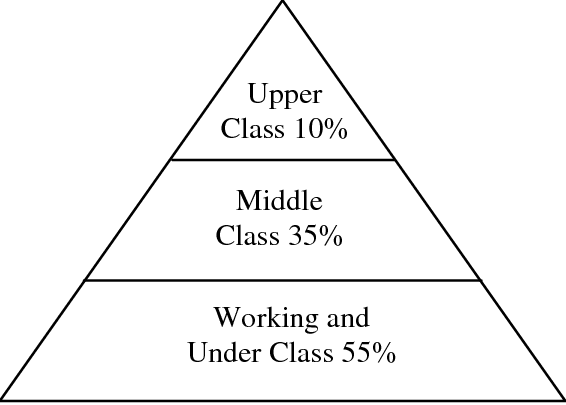
Your EDU score determines your Social Class as follows. This affects your starting money and occupational skill base of x 5% as follows:


3 Destitute. Starting money is 1/10. Skill modifier is  x 2% because you were always too busy making ends meet to concentrate on education.


4-5 Poor. Starting money is 1/4. Skill modifier (explained below) is at x 3% because you were stressed by your lack of means.


6-8 Lower middle class. Starting money is 1/2. Skill modifier (explained below) is x 4% because you had to work twice as hard as anyone above you.


9-12 Middle class. Starting money is as normal. Skill modifier (explained below) is normal (x 5%) because you were supported enough to reached your full potential.


13-15 Upper middle class. Starting money is x 2. Skill modifier (explained below) is x 4% because you were profligate.


16-17 Rich. Starting money is x 4. Skill modifier (explained below) is x 3% because you had it easier than most and coasted to success.


18 Millionaire class. Starting money is x 10. Skill modifier (explained below) is at x 2% because you never had to work a day in your life.


3) Step Two: Choose Occupation & Determine Skills


Occupations are classed into three levels, Lower, Middle, and Upper Class Occupations, and Occupational Skill Modifier is as above. Also, if you choose an Occupation from outside your class, you get a - 1 to your skills modifier for every level of difference . For example, an upper class character (base skill modifier x 2) would have no penalty being a doctor, but would get - 1 (so base skill x 1%) for 'slumming it' as a middle class police detective. This reflects both how rigid class distinctions are, as well as the reduced efficiency individuals have for doing a profession outside their habitus or social origin.


Level 1 - Lower Class Occupations (For Destitute, Poor, or Lower middle class Social Classes). Consists of disenfranchised, workers, outsiders.


Ex. Artist (unsuccessful), Author (unsuccessful), Entertainer (unsuccessful),Criminal, Hobo, Revolutionary, Tribal Fisherman, Tribal Warrior


NB: A player with an arts occupation PC rolls versus Luck or CHA x1% at creation to see if they are successful or not.


Level 2 - Middle class Occupations (For Middle class or Upper middle class Social Classes). Consists of professionals, public servants.


Ex. Athlete, Clergyman, Engineer, Farmer/Woodsman, Foot Soldier, Journalist, Missionary, Police Detective, Police Patrolman, Private Investigator


Level 3 - Upper Class Occupations (For Rich or Millionaire class Social Classes)
All Academics (until the 1970's when Neoliberalism kicks in and they become middle class). Politicians or leaders.


Ex. Antiquarian, Artist (successful), Author (successful), Dilettante, Doctor of Medicine, 

Entertainer (successful), Lawyer, Military Commander, Musician (successful), Parapsychologist, Professor.


For example, a middle class character (base skill modifier x 5) who wants to be a professor (one class above so will have skills at, while a 


4) Step Three: Determine Other Skills

Roll 1D6+2, then distribute these as attribute x 1% per point among any skills you want. You can beef up occupational skills or else take non occupational skills.


Emergency Defaults

In an emergency, a character is considered to have attribute x 1% in any skill they need that they could logically have. If you (surprisingly) haven't taken any skill in Pistol, if you pick one up in a firefight you are considered to have DEX x 1%, not 0%. However, a North American policeman character dropped into ancient Egypt would not be able to speak the language at INT x 1%.


5) Standard of Living


Along with the importance of social class for occupation and skill selection, it also strongly affects characters' lifestyles. 


ALL player characters lose 1% of their wealth between sessions to reflect the cost of living. This means lower class characters will also have to think of making ends meet while fighting cosmic horrors. In case rich characters hire poorer ones, or they get hired by NPCs, daily salary for the 1920's and 30's is INT in dollars per day, multiplied by social class level. So a character  would get INT x1 if lower class, x 2 if middle, and 3 x if upper class.


6) Roleplaying Effects

Social class also affects player and non-player character interaction as follows.


Same social level - Friendly, helpful.

One level apart - Guarded, does the minimum required.

Two levels apart - Arrogant or resentful, refuses help if not in their interest.


Conclusion


If you don't see the use or the fun in this proposal, don't use it. As for me, I think like my previous post on subtext in Lovecraft, this would really add depth to roleplaying, and is thus worth the effort.


Sunday, May 2, 2021

Advice on Running Social Interactions With NPCs

 Hi everyone!

This is advice I sent my CoC players and thought I'd share. Please enjoy.


I just thought I’d clear things up about social interactions with NPCs.


Mostly, I just roleplay the NPC as if they were a real person. In the first session when Lady Jane offered her sword to a policeman in a shootout, he boggled at her and shouted, “Just get some backup lass!” Ditto for when Shirly Bath walked into a hospital brandishing a shotgun and people freaked out. Act nice & they’re nice, act not and they’ll respond in kind.


When you need to get an NPC to do something special, here is basically my procedure:


Here is some advice about running NPCs that I shared with my players.


SOCIAL INTERACTIONS WITH NPCS


Tedankhamen will explain the NPC’s motivations

You can add or point out things that may be off

If we agree on these particulars, we move to the resolution.


There are then 3 skills you can choose from


Fast Talk – For when you need to flim flam in a rush.


Persuade – For when you need to appeal to reason or their better nature.


Credit Rating – For when you want to make a deal.


After choosing which route is possible and best for the situation, you enter into the roleplay & roll.


First, you act out what your character says.

If it makes sense or sounds good, you get a flat roll or even a bonus if done well.

If it doesn’t make sense or sounds off, you might get a penalty or automatic refusal.


Then you roll the bones.


A critical success might mean you get extra information or help.

Straight failure means they might still point you in the direction of someone who can help.

A fumble just means refusal, unless there is a good story reason for them to turn on you (ie secretly a nazi).


I am just trying to balance out the roleplaying and roll playing in a fun and fair way.

Hope that helps!