Showing posts with label sorcery. Show all posts

Wednesday, July 5, 2023

Stormbringer Redux # 19 Bargaining & Binding

OK, so you’ve prepared the materials, spoken the words, and summoned an extraplanar entity to do your bidding. If you were a noble it was easier, but if not, you also had to make some sacrifice.


Now comes the hard part…
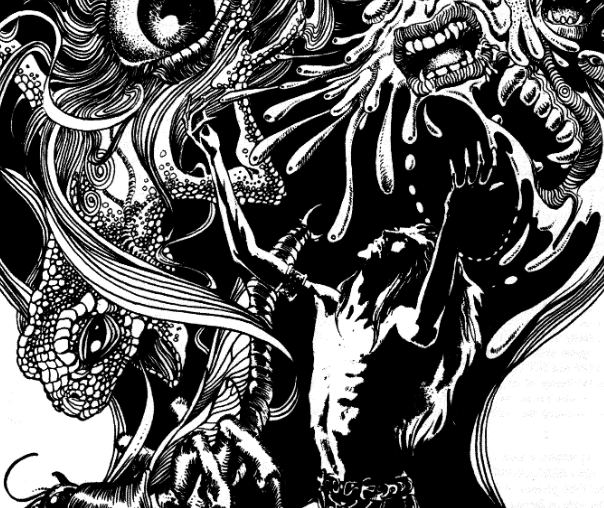


In previous posts, I walked through being a sorcerer, how to memorize summonings, how grimoires work, the procedure for calling entities, and the sacrifices they might require. I incorporated pre-existing rules, cleared up their inconsistencies, and clarified (to me) the whole affair.


So you’ve summoned an entity, be it a lowly elemental or an infernal demon. That’s the easy part. Now you have to bargain with them, with your life possibly at risk. And finally, you might have the hubris to try and bind them to your will.


ELEMENTALS

Bargaining with & Commanding Elementals - According to the rules, there is no need to bargain with elementals, nor would they have the intelligence to follow complicated commands. If you just summon one without binding, an elemental is a ‘one and done’ power, similar to a spell.


Don’t forget their motivation, which I outlined in a previous post and reprint here:


Elemental motivations

1) Follow the command of their Elemental Ruler

2) Preserve their element and themselves

3) Destroy opposed elementals they encounter

4) Return home as quick as they can


One ambiguity in the rules is how much an elemental can do during its brief tenure in the Young Kingdoms. The rules state,

Once summoned the elemental is required to perform the first command the summoner utters, if it is within the elemental’s power to do so. Once the command has been performed, the elemental is free again. [5.4]

However, a ‘command’ can cover a lot of different utterances, from simple to complex. In my experience, modern players especially try to phrase character actions with as many conjunctions as they can, “I jump on the deck AND throw three daggers THEN ready my crossbow…”


How can we define a command in a way that enhances gameplay?


The answer lies with the laundry list of powers elementals come with. For example, an air elemental (sylph) can fly, make a slight breeze, move light objects, blow arrows off course, carry messages, record spoken words, allow underwater breathing, destroy a salamander and itself, or other logical uses. If we limit one command to one power, we allow sorcerers to access just enough power to make summoning worth the trouble. You can have the sylph protect you from arrows or get you the keys, but you can’t have it do both.


But what if a sorcerer needs more power for longer? Then he or she needs to bind the elemental.


Binding Elementals - Whereas summoning an elemental can be done on the fly, binding requires the sorcerer to prepare a binding object in advance. (NB: In a later post I will give suggestions for binding objects.)


Once again, the binding procedure of the original rules is somewhat muddled. Stormbringer 1E offers a POW x 3% roll, while 4E repeats this but adds a confusing reference to the newly minted Sorcery skill. Both parrot the same wonky 1D4-2 roll and various confusing percentages to determine how much POW is gained or lost.


Instead, I’d just used the Sorcery skill and the POW gain rule I proposed to go along with it (https://tomboftedankhamen.blogspot.com/2022/09/stormbringer-redux-15-part-one.html)


Sorcery Roll Effect

Critical success (ie 1/10 of chance) Gain 1 POW

Normal success or failure No change in POW

Fumble (ie roll of 99-00) Lose 1 POW


Just as summoned Elementals can only reliably be commanded to do one thing at a time, bound Elementals also easily get confused with multiple commands. Sorcerers should only give one command (ie invoke one power) per round. If they do more, there is a cumulative of sorcerer POW x 5% minus x1% per extra command made. For instance, if you direct your fire elemental to act as a light source, no problem. If you then command it to heat your foe’s sword and immobilize an opponent’s earth elemental, there is a POW x5-2 = 3% of it getting confused and doing nothing that round.


THE 2 TYPES OF BINDING (OPTIONAL)


I know that Stormbringer binding, both in the game and appearing in Moorcock’s fiction, usually depicts entities trapped inside objects. However, the fiction also has demons staying freely for some time, such as the one guarding Urish’s horde. The rules also reflect this ambiguity by allowing Guardians to stick around for some time. 


Just as I split Summoning into two types (Short / and Long / New), we can categorize binding into two types - active vs passive. Any sorcerer must declare which type of binding they will do in advance.


Active - the elemental or demon resides in the object, waiting to be called on. If you need the entity to move around freely, this is what you want. This also gives the entity more chance to harm the sorcerer, so is generally avoided.


Passive - the elemental or demon merges with the object, and takes its shape. If you want the entity close to you and to gain benefits from the object it is in (ie protection from magic armor, increased psychic power range from a magic mirror), this is what you need.

NB: I will explain more in a later post on Binding Objects.


But what if mere Elementals won’t cut the mustard? Then the aspiring sorcerer needs to bump it up a notch and try their hand at summoning demons.


DEMONS

Bargaining with & Commanding Demons - Although elementals can be extremely useful, sometimes you need something more powerful and specialized. Summoning Demons is inherently risky, but any sorcerer worth the name will eventually attempt it.


Note this refers to Lesser Demons, not brute demons (humans devolved by Chaos), which can neither be summoned nor bound. For these, you must travel to a hellplane or open a gate to one, then bargain with them as with any NPC.


First, you must prepare for the summoning - get the herbs, sacrifices if they are required, and draw the Octagon of Chaos to prevent the fiend from instantly attacking you. Next, the GM secretly determines their attitude, which I reprint here (with corrections):


Demon Attitude Towards Summoning

(roll 2d6, keep the result secret from the players, but allow it to come out in play)


2-3 Hostile: The fiend swears to destroy the PC and his lineage, and will never stop trying to enact vengeance. Expect its supernatural allies to hound the summoner hereafter.

4-6 Displeased: The fiend is angered, and will require negotiating at a loss to become reluctantly cooperative. Not to be trusted, refuses to promise not to harm the summoner.

7-9 Negotiating: The fiend offers to cooperate for a limited time or set of circumstances, but will become enraged if this promise is not kept.

10-11 Cooperative: The fiend is happy to sow chaos for a time, on the condition it gets to do what it wants, which is usually destroying any mortal it desires, including the PC’s friends.

12 Pleased: The fiend has wanted to come play among mortals for some time. It thanks the PC for the chance.


Also, to help the GM roleplay the demon, never forget demon motivation, which I outlined previously and reprint here:


In general, demons want the following:

1) Freedom first and foremost

2) Revenge on their summoner

3) To sow chaos in a way suited to their nature

4) Obey their Chaos Lord if they must


If the sorcerer is doing a one off summoning, he will need to negotiate with the demon for his safety, and also for the request to be fulfilled. Remember that, according to the rules, demons with INT of 5 or lower cannot be bargained with. If you are unlucky enough to meet one of these, best to bind it or send it back whence it came. Even if you do send it home, roll a Luck roll (POW x 3%) or the demon will start hunting you for vengeance.


As I proposed in a previous post, forget the rulebook’s clunky mechanic for negotiating with demons, just use a Persuade roll with the following modifiers.


Modifiers to Demon Persuasion Roll


Stupid, insulting, or grossly unfair proposal = 1/10 Persuade skill

Unsatisfactory or minimally fair plan = ½ Persuade skill

Reasonable in meeting demon’s demands = normal Persuade roll

Plan favours the demon = +10% to Persuade skill

Great roleplaying = + 10% persuade skill


The results of the sorcerer’s Persuade roll affect the Demon as follows:


Persuade Roll Effect

Critical The Demon’s attitude improves by one level, and it agrees to the offer

Success         The demon agrees to the offer

Failure The demon demands a greater sacrifice of some sort

Fumble         The Demon’s attitude lowers by one level, and it demands

 a greater sacrifice of some sort


Even if a bargain can be made, the sorcerer must be wary of malicious compliance. This is exacerbated by the INT of the Demon as follows.


Demon INT Description

3-8         Not smart, follows simple commands, easily tricked

9-12         Same as average human

13-15 Intelligent by human standards, can make rational judgments

16-18 Human genius, equal to the sorcerer in most cases

19-24 More than human, can outwit the sorcerer easily


Begging for Demon Mercy


And what if the plans go awry, or the demon manages to put the PC at its mercy? In this case it is time to beg for your life or soul.  Once again, the Persuade skill already exists, so use that instead, but modify it based on the Demon Motivation previously rolled:


2-3 Hostile = 1/10 Persuade skill

4-6 Displeased = ½ Persuade skill

7-9 Negotiating = normal Persuade roll

9-10 Cooperative = +10% to Persuade skill

11-12 Pleased = +20% to Persuade skill


Note the PC can increase their chances of success by one level by offering a sacrifice to the demon, as below:

  • Agree to take a roll on the Wounds table

  • Offer the demon to take its allies instead

  • Promise their soul to the demon 


WHY BOTHER BINDING?


Merely summoning an entity is a ‘one and done’ activity. The demon or elemental appears, you make a deal, they do what you ask then POOF they are gone. They may try to enact revenge or be uncooperative or mischievous depending on their attitude or your rolls, but generally it is the safer thing to do. It also costs less in materials and preparation.


Binding an entity puts it on tap, but at the constant risk of betrayal. If you are of high status and doing the elemental or demon lord’s bidding, you should have little to worry about. But just as Elric was undone by the greater demon Stormbringer, bound lesser demons can be just as dangerous to their wielder.  Binding also costs much more in materials and preparation.


DEMON BINDING

Binding Demons - If you can’t be bothered to bargain with a demon, or would rather have them more (relatively) safely imprisoned in an object, then binding is your choice. This does not mean that the demon is docile or harmless, just that it does not have free range of movement. Depending on its attitude and intelligence, it may still try to impede, sabotage, or even kill the sorcerer.


As the rules state, to bind a demon, the sorcerer must win a POW vs POW struggle. Remember, demon POW is now 3D8 (3 to 24), and considering that sorcerers must have a minimum of 16 POW, you will have to choose wisely when to attempt a binding. The GM should not tell the player the exact POW of the demon, just that they sense it is low (3 to 12) or high (13 to 24).


Caveat emptor, caveat magus.

NB: I will post about binding objects at a later date.


BARGAINING WITH & BINDING LORDS


But what if the players are crazy enough to risk their characters by calling upon higher powers? Read on and despair!


Bargaining with & Commanding Elemental, Beast, or Lords of Higher Worlds -  You can’t bargain with any of these, you can’t command them. To Strassha, you are insignificant save for the water in your body, or the earth to which you will one day return for Grome. The Lord of Cats may see you only as a plaything or source of food. Arioch or Arkyn only see you as a means to an end in a game of cosmic chess.


You cannot even call on any of these without fulfilling the following:


1 The summoner has the social rank (noble or high priest) to summon a Lord

2 There are ancient pacts between the summoner’s homeland and the entity. Note that a royal member might theoretically create a new pact, which would be a great adventure seed.

3 Doing so is in the Lord’s own interest, ie protects animal life or the elements of nature or the advances of Law or Chaos.

4 The request is not impossible, insulting, or harmful to them. Making such a request would also be considered an affront and could be met with refusal to answer further summons, divine anger, and retribution ranging between anything from transformation, to exile or death. 

5 They feel like doing it (especially true for Chaos)

6 They expect any debt to them to be repaid (especially for Law and Chaos)


You don’t bargain, you plead for their assistance.

You don’t command, you explain what is needed and how it serves THEIR interests to help you.


I wouldn’t even allow a Persuade roll, just good roleplaying and a good plan.


BINDING LORDS

Now, what if a player states they want to BIND Arioch??!?! What do you do then? (NB: There is ALWAYS one…) After all, if Corum can inadvertently have the gods killed off, players should be encouraged to mess with them as well.


Binding Lords - Get a hold of yourself! First, this should be impossible for any newly minted sorcerer. However, in the spirit of a game about Chaos, let’s think this through as a thought exercise.


First, getting the means and materials for binding a Lord (the hubris!) should be an epic adventure, requiring PCs to quest for one of the following’s aid or advice:


1 Grimoire

2 Alien god

3 Ancient forgotten god

4 Dead race

5 Rival lord of same type

6 Different type of lord

7 Greater demon

8 Extradimensional entity


Second, the method should involve blood, sweat, souls, tears, and a lot of luck. I leave the details to any GM crazy enough to allow this, and fun enough to run with it.


Third, the consequences of success should be severe, however, for binding any type of Ruler. It should, simply put, break the gameworld.


Here are some examples:


Grome - Earth falls away, islands float over a void

Kakatal - Fire no longer can be lit, and the sun begins to dim.

Strassha - Water drains away, the earth withers. Kakatal and Grome move into the empty bodies to turn them into endless deserts and lava fields.

Lassha - Air begins to foul, only pockets of life remain protected under the ground or ocean.

Lord of Cats - All cats immediately begin attacking humans and gain intelligence.

Arkyn - The laws of nature begin to break down, gravity become unreliable, time distorts, runs backward, or skips away. Time to get trippy.


What are the benefits of binding a massively powerful and vengeful entity that you certainly won't be able to control for long? Beats me. Go read some Sandman for reference and see how well THAT went...


Thursday, June 15, 2023

Stormbringer Redux #18 addendum - First Time Summonings: Number & Failure Conditions

When you’re doing a deep dive in complicated, vague, and sometimes scattered material like Stormbringer, it is inevitable that you miss things. In my last post, my thoughts on the mechanics of First Time Summonings were repositioned so many times they got lost in the shuffle.


Perhaps this is a good thing. First Time Summonings are a thorny issue, so best looked at by themselves.


FIRST TIME SUMMONING MECHANICS (New / Long Summoning) 


For the first time summoning of an entity, there are 4 aspects that must be considered:


1 Time

2 Number of rolls

3 A series of successes

4 The cost of failure


1 SUMMONING TIME


As noted in the last post, I jettisoned the Chaos Value system of 4E and linked summoning time back to the old 1E sorcerer levels, with 1 hour per entity level:


“For New / Long Summoning, time is 1 hour per entity level (Elementals = 1, Demons = 2, Elemental Lords = 3, Beast Lords = 4, Lords of Higher Worlds = 5).” (previous post)


So if you want to summon Pyaray, better cancel all appointments for the next five hours. However, this is the MINIMUM time required, as the time can increase drastically with failed rolls, as the next aspect shows.


NB: Although in 1E, the rules state that an elemental ‘must’ be bound before doing anything [5.4], I disagree with this, as we shall see in the next post on Bargaining and Binding.


2 NUMBER OF ROLLS + 3 A SERIES OF SUCCESSES


In the 1E rulebook, the entity level not only determines the hours required for a summoning, they also decide how many rolls IN SEQUENCE are required for a successful summoning:


“The Type of magical entity being summoned can be used as a value to determine the number of times a sorcerer must make his Summoning roll in order to summon the entity.” [5.3.1 in the 4E book, my italics] 


Honestly, I don’t ever recall using this rule back in the day. This injucture is repeated no less than three times in the same section, so the designers must have thought it important.


I agree with them.


However, it is not mentioned if this is the first time summoning, or subsequent times. Considering how hard it was for Elric and others to summon Arioch for the first time in the fiction, I’ll interpret this as the first attempt at summoning a new entity, whether from a grimoire or in FREE INT but never used. The following extract from Elric of Melnibone provides an insight into how apt this mechanic is:


When he had meditated for more than five hours, Elric took a brush and a jar of ink and began to paint both walls and floor with complicated symbols, some of which were so intricate, that they seemed to disappear at an angle to the surface on which they had been laid. At last this was done and Elric spreadeagled himself in the very centre of his huge rune, face down, one hand upon his grimoire, the other (with the Actorios upon it) stretched palm down. The moon was full. A shaft of its light fell directly upon Elric's head, turning the hair to silver. And then the Summoning began.


Elric sent his mind into twisting tunnels of logic, across endless plains of ideas, through mountains of symbolism and endless universes of alternate truths; he sent his mind out further and further and as it went he sent with it the words which issued from his writhing lips—words that few of his contemporaries would understand, though their very sound would chill the blood of any listener. And his body heaved as he forced it to remain in its original position and from time to time a groan would escape him. And through all this a few words came again and again.


One of these words was a name. 'Arioch'.


The rulebook adds that if even one of these multiple rolls is failed, the process must be restarted. For example, if you’re summoning Donblas, Lawful Lord of Commerce,  for whatever reason, you need 5 rolls. If you succeed at 4 but flub the last one, you must start the whole process over. You’ve spent 4 hours gametime, as well as lost the 5 POW cost for summoning a Lord of the Higher Worlds.


This is fine by me. But wait, there’s more!


4 THE COST OF FAILURE


However, the rules continue that there is a heavy price to be paid if you fail a New / Long first time summoning, one that might render a character useless as a sorcerer. For example, if you’re trying to summon a Type 3 entity (Elemental Ruler) for the first time, the rules state:


“For every roll he fails, the sorcerer loses 1 off of a random characteristic. Roll ID8 to see which characteristic is reduced: 1 = STR, 2 = CON, 3-4 = INT,5-6=POW,7=DEX,8=CHA.” [5.3.1 in 4E]


WHOA. This is a big incentive to NEVER do sorcery. And I LIKE it. Since sorcerers are stated to start with one entity already, this means they have one safe with no risk. It is when they try to call new ones that they may damage themselves.


In game terms, older Stormbringer is often derided for allowing sorcerers to quickly load up on demons and fatally unbalance the game. With the risks of summoning failure this high, you can expect players not to tempt fate overmuch, or for sorcerers to survive doing so.


One last thing to remember, is that whether a summoning attempt succeeds or fails, the sorcerer still has to pay the cost in POW loss equal to the entity level.


CONCLUSION


When you are updating and clarifying old rules like these, you have to look at the big picture. Was the reason for the original rules sound? Does the rule or mechanic stand up for modern people playing an old game? Does it evoke the IP, or take away from immersion? Is a change necessary, or just a clarification or tightening up of mechanics?


In a way, I feel like Fuzz on Car SOS, taking a vintage vehicle and making it run faster and smoother on modern roads with as much of the original body intact, but with power steering and other necessities added in seamlessly.


I hope you agree it is worth the effort.


Wednesday, June 14, 2023

Stormbringer Redux # 18 Sorcerers & Summoning


I never got to finish this post last year as my life fell apart and I had to move to the other side of the world to build a new situation for sonny and myself. Now it is time to shake the rust off and get this posted.]


What I'm Talking About


In previous Stormbringer redux posts I outlined how to determine the motivations and conditions of entities summoned (post # 5 HERE), and how to create randomized lesser demons (post # 15.2 HERE). I also proposed a Summoning skill (post # 15.1 HERE).


Now in this epic two parter, I hope to make sorcery clearer, simpler, and more evocative of the source material.


WHO CAN BE A SORCERER?


So, this is a good place to review the official rules, as they are somewhat convoluted and always grow dimmer in my mind as I age. I will examine both the 1E and 4E rules, then give my take on them.


The rules of 1E and 4E tell us this,


“Player-characters with INT and POW adding to 32 or more, with a minimum INT of 16, have the potential to be sorcerers or wizards (the names are interchangeable). A Melnibontan, Pan Tangian, or Priest character of any country with a combined INT and POW of 32 will have been trained as a sorcerer. A Noble or Merchant character has a 50% chance of having been trained as a sorcerer if he qualifies as one.” [5.3]


Honestly, I have no problem with these rules, except maybe also including the Noble or Merchant chaances in the Character Generation rules would have been useful. After this follows an explanation of how other characters with the requisite INT and POW to be sorcerers can learn to do so during play, which is both a great piece of world building and an excellent adventure seed.


RANKS OF SORCERY

Here is the first great split between the editions of classic Stormbringer. 1E ranked the sorcerer’s power based on the entities they could summon [5.3.1 Sorcerous Abilities], while 4E ranked the entities [5.3.1.2 Types of Magical Entities].


1E Ranks


4E Ranks


I understand the reason for the change, to incorporate the 4E demon power point-buy system, but I prefer the elegant 1E system of sorcerous ranks. Also, since the requirements for summoning Elemental, Beast, and Chaos Lords are the same as 1E but scattered throughout the rules, the 1E ranking works best.


To simplify, here are the ranks again:


1st (INT + POW = 32) Can summon one type of elemental.

2nd (INT + POW = 36) Can summon two types of elemental, one type of demon.

3rd (INT + POW = 40) Can summon three types of elementals, and three types of demon. 

Can try summoning 1 Elemental Ruler if near the element.

4th (INT + POW = 44) Can summon all types of elementals, and five types of demons. 

Can attempt to summon two Elemental Lords, and if Melnibonean, one Beast Lord.

5th (INT + POW = 48) Can summon any elemental or demon type. 

Can summon any Elemental Ruler, plus any one Lord of Law or Chaos if ceremonies performed & entity is willing. If Melnibonean, can summon three Beast Lords.


NB: As I noted in a previous post, I have modified this ranking in a few ways for convenience:

  1. I strip out the various percentages and just use the straight Sorcery roll (INT x 3% to start).

  2. I would let noble sorcerers from any nation summon the entities listed in their Nationality & Religion description [2.3.7.2]. Pan Tang sorcerers could summon Chardros or Pyaray, for example.

  3. Similarly, noble sorcerers from any nations with ‘none’ or ‘other’ written choose an appropriate Beast Lord, so a noble sorcerer of Oin or Yu could try to summon a Lord of Jaguars, for example. The GM could also allow them to summon minor godlings or entities from different mythos.

  4. Priestly sorcerers could also attempt to summon entities if in great need and of great service to the deity. Sorcerors who are neither noble nor priest would have to make great sacrifices or become noble to have a chance at summoning lords.


STARTING SORCERY SKILL

This is somewhat vague and muddled in the text, so here is how I break it down.


  1. All sorcerers start with INT x 3% in Sorcery skill, which replaces the varied percentages in 1E tables [5.3.1] and [5.3.3.1].

  2. During character creation, if they succeed at the roll, they may start with one bound elemental or demon of their choice.

  3. They can either have grimoires for each type of elemental or demon they can summon, as well as for each high lord they know how to contact, or have them memorized, which takes up their FREE INT.


FREE INT

Although I didn’t quite ‘get’ this rule in my younger days, it now makes complete sense. By limiting the number of demons a sorcerer has memorized by INT, game balance is preserved, and the player has to choose which summonings to keep ‘active’ in their Memory (which would have been a better term than Free INT), and which to transfer to a grimoire. 

Since I won’t be using Chaos Value (CV points, ugh), instead I’ll tie used FREE INT to the summonings possible at each caster level. Strangely, the 4E rules omitted CV values for Lords, so this also rectifies that oversight.


FREE INT Costs

Each elemental type = 1 pt

Each demon type = 2 pts

Each Elemental Ruler = 3 pts

Each Beast Lord = 4 pts

Each Chaos (or Law) Lord = 5 points


NB: For spell like effects (ie summoning Stormbringer’s brothers), or calling entities not in the list above (ie calling the Grahluk), a blanket 2 pt cost seems sufficient.


Since Elric has a supposed INT of 25 according to the rules, let’s see how he works out:

Arioch 3, Air elementals 1, Grahluk 2, Strassha 3, Creature of Matik 2, Stormbringer’s Brothers 2, Weakening Belbane 2 (and others I have doubtless forgotten)

Total = 15


So Elric has used a little more than half his FREE INT, which can be turned to impromptu spells and learning new summonings in the course of gameplay. I like the low point cost of unique summonings or spell effects, as it frees up the player and GM to make the game more freewheeling and like the books. If the sorcerer eventually fills up or exceeds his FREE INT, he must ‘download’ some summonings or spells into a grimoire.


Speaking of grimoires…


GRIMOIRES

In review, the grimoire rules of 4E integrate very well with my suggested houserules.

First, if we take the stated “10, 000 LB per spell contained” and change it to “per FREE INT point stored within,” we get an idea of how pricey and rare grimoires are. Elric’s sorcery calculated above would thus cost 150, 000 LB, a proper sum for the magic of a Melnibonean emperor!


In addition, the reference to a blank grimoire costing “500 LB per 1 FREE INT” also means a 25 FREE INT spellbook will cost 12, 500 LB. These are thus rare works of craft, and should only be purchasable from Chaotic bookbinders with skill of 90% or more, although being a member of a Chaotic clergy may provide a discount in cost offset by limits in size and restrictions on content.


Finally, there is the reference to grimoires giving a bonus to summoning any of the entities locked therein, but without any details. If we take + 5% per point of FREE INT used in this way, we get a neat way to use up the extra FREE INT of a grimoire - to reduce the chance of summoning failure. Since sorcerers can attempt to summon from any grimoire, this could give starting sorcerers a leg up and a reason to adventure for discovering old grimoires.


Aesthetically, I would rule that the pages used for inscribing summonings or spell effects would be 8 pages per 1 FREE INT, and full of arcane scribblings and mind bending illustrations. Conversely, grimoires giving a bonus to summonings would be embossed with gems in equal number to the bonus they give. Removing the gemstones would also destroy the bonus. 


However, there are also some weird grimoire rules in the Stormbringer rulebook that need changing. There is the 1E rule that you can raise your sorcery level from a grimoire by studying it for 40 - INT game months and making a successful Sorcery roll, with the risk of dying if you fail it [5.3.2]. This seems rather harsh, in that it takes the character out of the game, and penalizes a simple roll with instant death. I would instead give the player the choice of studying the 40 - INT months, during which time they must play another character, or instead make the Sorcery roll resulting in death if failed. Of course, this death could just be being dragged to a hell plane, giving other characters an incentive to go rescue them.


Meanwhile, 4E Stormbringer says grimoire doubles summoning time, and that summoning from a grimoire requires intense concentration [5.2.1.2]. As we shall see in the summoning times rules below, I think the length of summoning is already long enough, and concentration is a given, so I will ignore this.


At some later date, I might consider rules for cursed spellbooks and sample grimoires, but I think this is enough for now. As a final note, Moorcock’s work describe High Melnibonean as “the language of high sorcery,” but I would like to think this is insular Melnibonean arrogance, and that other tongues have their own sorcerous traditions in their own languages.


SUMMONING TYPES, TIMES, & COSTS

Funnily enough, 1E had a makeshift summoning times insert called simply ‘Magic’ that disappeared by the time 4E was published. It vaguely suggested 2D10 minutes for elemental or demon ‘quick’ summoning, and an unhelpful ‘hours’ for longer summoning. The only reference in 4E to summon times was 1 hour per type of entity according to [5.3.1.2], with this referring to the first time ever summoning.


To clarify this and link up to my rules suggestions, let’s split summonings into two types.


TWO TYPES OF SUMMONING

1) Quick or Short Summoning - For entities already memorized and previously summoned. Also applies to impromptu magic spells. 


2) New or Long summoning - Applies to entities memorized but never summoned before. Also applies to summoning from a grimoire, whether for the first time or previously memorized but transferred to a grimoire and no longer in FREE INT.


SUMMONING TIME & SUMMONING ROLL

Next, time to summon and the number of Summoning rolls required depend on the type of summoning. 

For Quick / Short Summoning, time is 1D8 minutes per entity level. (Elementals = 1, Demons = 2, Elemental Lords = 3, Beast Lords = 4, Lords of Higher Worlds = 5). So summoning an elemental would only take 1 to 8 minutes, and could conceivably help in a battle while allies held off foes. Conversely, trying to summon a Beast Lord would take between 4 to 24 minutes, a risky proposition on a battlefield, but useful if imprisoned in a dungeon teeming with rodents and insect life.


(NB: Spell like effects should be on GM fiat, both in terms of time and effect. Just as Elric supposedly used spells to keep a magical door open or temporarily weaken a monster, such effects should be instantaneous and of small scale)


For New / Long Summoning, time is 1 hour per entity level (Elementals = 1, Demons = 2, Elemental Lords = 3, Beast Lords = 4, Lords of Higher Worlds = 5). If summoning from a grimoire, the sorcerer can choose to enter the summoning into FREE INT, or leave it unmemorized.


As stated in the rule book, the sorcerer must make one roll EVERY HOUR, and has to start the process over if one is failed.


NB: This fits well with the Elric novels, where the first time contacting Arioch cost Elric much in time and energy, but became much quicker as the saga progressed. Also, the GM should feel free to shorten times if the entity wants to come or has urgent business with the summoner.


SUMMONING COSTS (POW & SACRIFICE)

There are two types of costs, 1) temporary POW drain, representing fatigue and 2) a sacrifice if the sorcerer is not a noble or cleric, or is not affiliated by nationality to the entity summoned.

POW drain is equal to the level of entity summoned (Elementals = 1, Demons = 2, Elemental Lords = 3, Beast Lords = 4, Lords of Higher Worlds = 5). If a sorcerer’s POW is reduced to 0 by multiple summonings or spells, they collapse unconscious for 3D8 hours.


Sacrifices are as follows:


Elementals require the sacrifice of a life from an opposing element (ie an Earth elemental would require a fish, Fire a bird, Water any land animal, and Air a salamander or fire beetle. 


Demon sacrifices depend on the type of demon, and prefer humans close to them. A Combat Demon would prefer a soldier, Passion a harlot or casanova, Knowledge a scholar, Transport a charioteer or boatman, etc.


Elemental Lords require human souls lost in their element (ie drowned sailors, those burnt in volcanos, thrown off mountains, buried in sand, etc).

Beast Lords require the sacrifice of a giant version of their prey, or else a human trussed up to devour. 


Lords of Higher Worlds may answer a summons accompanied by the sacrifice of a few souls, but demand a much higher price. Once you deal with them, they expect fealty and will interfere with your life forever.


SUMMONING PROCEDURE

(NB: This is for Summoning without Binding. Bargaining and Binding will be covered in part two)


Each elemental type - First, prepare a handful of the element. Follow with 1D8 minutes (short) or 1 hour (long) of undisturbed chanting. Sacrifice at the end if required. As stated previously, elementals will not oppose their Elemental Ruler, and may not be 100% cooperative or competent.


Each demon type - First, prepare burning herbs, then the octagon of Chaos (unless you want to be immediately attacked). Follow with 2D8 minutes (short) or 2 hours (long) of undisturbed chanting. Sacrifice at the end if required. As stated previously, demons have their own agenda, and may not be 100% cooperative or competent.


Each Elemental Ruler - First, the summoning can only be done in a biome of the element. Follow with 3D8 minutes (short) or 3 hours (long) of undisturbed chanting. Sacrifice at the end if required. As stated previously, Elemental Rulers seek to preserve their element first and foremost, and protect the world second. They may not be swayed from these goals.


Each Beast Lord - First, the summoning can only be done in a habitat of the creature. Follow with 4D8 minutes (short) or 4 hours (long) of undisturbed chanting. Sacrifice at the end if required. As stated previously, Beast Lords seek to preserve their species first and foremost, and protect the world second. They may not be swayed from these goals.


Each Chaos (or Law) Lord = Follow with 5D8 minutes (short) or 5 hours (long) of undisturbed chanting. Sacrifice at the end if required. As stated previously, Lords of the Higher Worlds only contact summoners when they want to, and if it suits their mysterious agendas.


SORCERY SUMMARY

                        QUICK / SHORT vs NEW / LONG

SOURCE         Memorized From grimoire

TIME 1d8 minutes per level 1 hour per level

ROLLS         Once Once per hour, restart if failed


Next time, we take a deep dive into the muddled rules of BARGAINING and BINDING!