Showing posts with label bestiary. Show all posts

Monday, July 20, 2026

NUNA Bestiary # 2 Haunted Rigs, Petrophantoms, & Leviathans

Up to now, I have gone into depth about the land of Nuna, its people and its monsters. Now I'd like to take a look at the sea, the Grand Banks where The Titanic lies sleeping and the Riggers build a new society on their platforms and ships.

Been reading Mike Mignola and felt inspired.


THE OFFSHORE

I had an uncle named Yugan who worked on oil ships and then oil rigs off of Newfoundland as the industry took off in the 1980's.

I used to love hearing his creepy stories of strange noises in the night, workers who went for a stroll on the deck and never came back, and a hundred other unsettling things.

This is probably why Riggers became a major component in NUNA. There are two main threats they face.


Petrophantoms

Before The Fall, Newfoundland was a petroculture, booming when the oil sold, busting out when it didn't. Oil is the residue of formerly living things, so what if it still carried some of their essence?

If you've seen Fish Night on LOVE, DEATH, & ROBOTS you get the vibe. I am working on my next scenario now and it is set on a deserted oil rig.

Should be fun!


Leviathans

On the other hand we have monsters from the Abyss, the Leviathans. Then came be huge monstrous things, or else misshapen weird creatures, neither dead nor alive. I remember as a child we would take the ferry from Goose Bay to Lewisporte, and later from Newfoundland to Nova Scotia, and looking into that dark mirror of sea you could imagine ANYTHING crawling out of it.

And so I have.


Get Into NUNA!

If you are intrigued, pick up the Nuna quickstart or free preview at the links below.


Free Preview

https://legacy.drivethrurpg.com/product/575125/NUNA-Rpg-Player-Characters-Free-Preview


Quickstart

https://legacy.drivethrurpg.com/product/575172/NUNA-Rpg-Quickstart


Tuesday, June 16, 2026

NUNA Bestiary # 1 - GIANTS, Giants, and giants

 Atelihai!


If you've ever read any Inuit folklore, you'll realize that Giants play a big role in their stories. There are basically 3 sizes or kinds:


Arctic Titans

These giants are so huge that they can cause tsunami when they go fishing, and their heads are literally in the clouds or among the birds. They are seldom hostile to the Inuit, but instead try to interact or befriend them, with equally comic or tragic consequences. Ever hear the story of the Titan who decided to wife swap with an Inuit man? It went just about as well as you'd think...


Arctic Giants

This next group, often called Tuniits (spelled with many variations from Alaska to Greenland) tower above humans, and are often helpful or wise. They may gift magical weapons of enlist Inuit to aid them in their duels, which they are said to have engaged in often, leading to their extinction. They are solitary and strange, but may take a village under their wing if lonely.


Arctic Ogres

The word Tuniit is often used for these as well, but the stories present a different picture. These Tuniit are larger than Inuit, but not by much. They have immense physical strength, but are also supposed to have disgusted the Inuit by their poor manners and hygiene. The menfolk steal Inuit umiak (rowboats) for their own fishing, and may be cannibal, although stories of kind or helpful Ogres exist. The women for their part cook meat by keeping it in their clothes (Tartar steak?), but may kidnap men they like. In fact, there is a whole subsection of she-ogres that kidnap babies, either to raise as ogres or to eat. Tuniit ogres are said to have lived in large stone houses which they built by hand, and to have slept upside down inside them.

Archaeologists have indeed found stone structures built across the Arctic, and the prevailing theory among Anthropologists is that these were made by the Dorset Inuit, the precursor of modern Inuit. The ancestors of the Inuit we know are called Thule, who spread out from Siberia across the Arctic 1000 years ago and dominated the region with their superior technology, which included barbed harpoons with animalskin floats so that prey would not sink. It is believed that the Thule drove the larger but less sophisticated Dorset Inuit into extinction, based on the many stories of tricking, trapping, or killing Tuniit ogres that have survived.

And Historians believed that there was ANOTHER group of Inuit long before the Dorset...

So NUNA will include both many kinds of Arctic giants, as well as disappeared races.


Wednesday, July 12, 2023

Moorcock Bestiary # 1 Owl + Bear and Random ‘Thing’

I think of all my Stormbringer redux posts, my musing on a Moorcock Bestiary (post #12) was my best work. It shows an analytical understanding of the source material, and models how to practically convert that into satisfying game mechanics.


Today, I want to exercise my monster making muscles using the principles I outlined. 

First, I’ll take a monster common in FRPGs and try to Moorcock it up. Next, I’ll randomly roll the elements and try to free associate a suitably Moorcockean monster.


Let’s dive into it!


MONSTER 1 THE OWL + BEAR


I have heard that many other FRPGs use hybrid monsters, and in particular the strange hybrid of an owl and a bear seems to have taken root in the collective gamer psyche.


Although Moorcock’s symbols are largely Eurocentric, considering that he wrote Elric in America and lives in the Lone Star State, let’s use Native American iconography to make this monster special.


First, how do native americans see the owl?


The Owl possesses the knowledge of a people’s ancestors, and is the bridge between the physical and spiritual world. It ensures a continuation of the great culture of the Northwest Coast, which has lasted for thousands of years.


We can add to this its biological power of seeing in the dark, as well as its shriek which makes smaller prey freeze in their tracks.


How about the bear?


The Bear is the protector of the animal kingdom. With its great power and human-like qualities, the bear is known as the Elder Kinsman and always treated as a high-ranking quest. The also symbolizes strength, learned humility, teaching and motherhood.


Physiologically, the bear is immensely strong, has a great sense of smell, can fend off poisons, but can be scared off by bigger or louder creatures and hibernates through the winter.


So, we have a strong nocturnal hunter with ancient knowledge used to protect the animal kingdom and / or connect worlds. It could be a prince among Beast Lords, or an ancient portal guardian.


In game terms, it could be used at least two ways:


  1. Source of Knowledge

In this context, PCs would have to find a way to wake the entity, then get its wisdom. Perhaps they have to bring back its prey, or else turn eternal day into night for it to open a gate or point them towards an elder race.


  1. Ancient Guardian of Slumbering Secrets

In this meaning, PCs would have to make their way through a darkened maze to find a secret. Once the secret is found, the ear piercing shrieks of the guardian draw even closer, freezing PCs in their tracks. The party better have at least one sorcerer if they wish to survive intact.


As for stats, the astute reader can throw these together from the books, ie. STR of bear, DEX of owl, See in Dark 90% (45% in light), etcetera.


MONSTER 2 - Psychedelic Metaphor


The reader may remember that I devised the following schemata or taxonomy to explain the Moorcockean monsters of the Elric saga:


1 Metaphorical - Have the fiend represent some theme, such as fear, pride, greed, etc. i.e. The goblins of Myshella's castle.

2 Allegorical - Make a story behind the monster suggested by its appearance, behaviour, and powers. i.e. Grahluk and Elenoin.

3 Psychedelic - Make the creature mind-bending - trippy but also transformative. i.e. Agak and Gagak.

4 Weird - Choose a traditional monster, then flip it. i.e. Clakar for Harpies.

5 Cosmic - Have the horror be beyond mortal understanding, and sanity-rending. i.e. Kyreen.

6 Corrupted - The monster is a human warped by chaos, usually through their own choices or flaws. i.e. Pigs, Snake, Butterflyman.


Let’s roll a pair of D6 and see what inspiration we get:


1 and 3


So, a metaphorical and psychedelic monster. It should represent a theme, but also be trippy but transformative.


Let’s free associate….


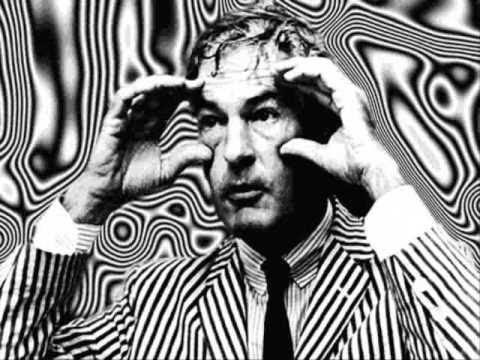
The first thing that springs to mind is Timothy Leary, and his motto of “Turn on, tune in, and drop out.”


OK, so I picture Dr Leary in his trademark suit, walking out to greet a band of adventurers spoiling for some violence. The walls behind him ululate with psychedelic patterns and colours, as does his suit. He eyes their weapons and says,


“That is not the way. Don’t let the Man use you!”


If any PC tries to harm Dr Leary and hits him, there is a flash and they are transformed. Roll 1D6 and apply one of the following results. Read the Leary quote out, then apply the effects without explaining them.


1 “Learning how to operate a soul figures to take time.” PC is turned into a POW ghost.

2 “Science is all metaphor.” All skills and objects become useless, PC can’t tell his arm from his leg, a shield from a canteen.

3 “Philosophy is a performance sport - you have to play it with somebody back and forth.” The PC becomes another Leary facing his erstwhile comrades.

4 “The role of anxiety in the development of human personality is central, and it is intricate beyond our understanding.” The PC must face their most feared monster in a dark pit or on a lonely mountain.

5 “The universe is an intelligence test.” The PC is set adrift floating in the enormity of space, which looks at her with an impassive, uncaring eye.

6 “Think for yourself and question authority.” The PC is warped back to when they were given the quest, but this time from the vantage point of the one that gave it to them.


Of course, the PC can only escape the situation by eschewing violence and seeing things as they truly are, just as Earl Aubec saw the goblins of Myshella’s castle as reflections of his own fears. Players should realize that they must engage with Leary and explain who they are and why they are doing what they have come to do. The GM can either let them pass, or have Leary let himself be symbolically slain.


The metaphor, of course, is that knowing oneself is the only way to truth.


NB: If this is all a bit navel gazey and ‘not D&D enough’, you can substitute with a random creature, but I think your game will be the worse for not trying it if you have some Moorocock fans at the table.


How about them apples?


Sources

https://magpiejewellery.com/pages/first-nations-animal-meanings


Friday, April 8, 2022

Stormbringer redux # 12 Making A Moorcockean Bestiary

 MOORCOCK'S MONSTERS


Reading the old rulebook, the authors give some examples of creating creatures, and advise ripping off mythology or letting your imagination go wild as this is the "essence of Chaos." Meanwhile, the First Stormbringer Supplement introduces unicorns, probably ripped unedited from the pages of the Gateway Bestiary for Runequest. Both these approaches miss the mark on the basic taxonomy of Moorcock's bestiary, whose creatures are all rich with symbolism and thematic elements. Although the monsters from Hawkmoon and Corum are more traditional fantasy creatures, Elric's bestiary is a bit deeper, and so here I shall give some suggestions on how to replicate this. 


MOORCOCK'S CREATURE TAXONOMY


On a close re-reading of the Elric novels, I identify the following classifications of monsters:


Types 1-2: Metaphorical / Allegorical


The first type are metaphorical monsters, ones with huge symbolic portent. The goblins faced by Aubec in Myshella's castle are all reflections of his fear, while he defeats the Golem by showing the construct its own inhuman reflection in a mirror. Next we have the allegorical monsters, which suggest a larger story. The Grahluk are bestial men and women, whose only purpose is killing the evil image of their partner, then their self. I dimly recall Moorcock stating Elric was conceived after a failed relationship, and this does seem to resonate with the theme of love gone awry.


Types 3-5: Cosmic Horror / Psychedelic / Weird


I lump all these together because they seem to fit in various combinations. The alien sorcerors Gagak and Agak are definitely mind-blasting cosmic horrors, but trekking through their bodies as Elric and his comrades do is a psychedelic fantasy ripped from Fantastic Voyage (1966). They are also weird, i.e. a radical reimagining of traditional monsters, in this case vampires who suck whole universes dry.


What are the characteristics of these three types of monsters? Cosmic horrors make humans seem insignificant and follow different rules of reality left over from a former age, such as the Kyreen and Bronze Gryphs. Psychedelic monsters are not only trippy or hallucinatory, but also reflect 1960's and 70's ideas of transformation of the self via destruction of traditional notions of sexuality and social roles. Observe the hermaphrodites who try to re-sex black warrior-scholar Otto Blendkar, who describes them to Elric as "... a blue-skinned, hermaphroditic race who determined to cure me of what they considered my malformations of hue and sexuality. The scar you see was their work." Finally, weird monsters are 'flipped' versions of classic mythological monsters. For instance, the Clakars who attack Elric and Moonglum on their sea voyage seeking for the Dead Gods' Book are cognates of the Greek Harpies, who also guarded the underworld and attacked King Phineus in retribution for attempting to know the future like Elric.

The Stormbringer game does translate Moorcock's creatures well enough, but by porting in Runequest monsters or traditional fantasy fare as is, such as the unicorn from the 2nd supplement, I feel something is lost.


Type 6: Corrupted Humans


This final type is the corrupted human, who are considered lesser types of demon. There is snake and pig, then the Chaos butterflyman of Theleb Karna. Rackhir describes these when he and Elric travel to the demon city of Ameeron:


Elric: "Have you seen any of these demons?"

Rackhir: "Aye. The usual bestial sort. Coarse, stupid and powerful - many of them were once human before electing to bargain with Chaos. Now they are mentally and physically warped into foul, demon shapes."


These would be the easiest to generate - simply roll on the demon abilities table or some other random source of chaotic mutations and apply them to a human.


For simple antagonists, mooks or cannon fodder, roll once.

For tough monsters, roll twice.

For main antagonists or bosses, roll 3 times.


Making Your Own Monsters


Admittedly, it is daunting to try and rival Moorcock's bestiary, which he conceived at the height of his storytelling and creative powers. Nevertheless, with these 6 themes, you can at least give it a good try.


1 Metaphorical - Have the fiend represent some theme, such as fear, pride, greed, etc. i.e. The goblins of Myshella's castle.

2 Allegorical - Make a story behind the monster suggested by its appearance, behaviour, and powers. i.e. Grahluk and Elenoin.

3 Psychedelic - Make the creature mind-bending - trippy but also transformative. i.e. Agak and Gagak.

4 Weird - Choose a traditional monster, then flip it. i.e. Clakar for Harpies.

5 Cosmic - Have the horror be beyond mortal understanding, and sanity-rending. i.e. Kyreen.

6 Corrupted - The monster is a human warped by chaos, usually through their own choices or flaws. i.e. Pigs, Snake, Butterflyman.


EXAMPLES


1. Unicorn


So let's take the traditional fantasy unicorn and flip it to make it weird. Its inclusion in the Demon Magic supplement is extremely nondescript and decidedly ho hum.


So basically the traditional unicorn is known for 1) being tamed by virgin maidens and 2) its horn being magical, capable of curing the sick, purifying waters, or skewering monsters.


The elements of a unicorn are thus a horn that kills or cures, and an affinity for virgins. Still a bit bland and distasteful in a modern sense.


We could go the route of flipping the horse into a horned monstrosity, such as the Dreaming God Dagoth of Conan the Destroyer (which I just discovered was written by Roy Thomas, who penned the amazing Elric comic adaptations with P. Craig Russel!!). 


But how about we go the other route, and change the maiden?


I would make the Unicorn a necessary cure for some Chaotic infestation, much as the Black Bull of Crinnanas of the Corum Chronicles, who is sacrificed to renew the land after the Fhoi Myore turned it into a frozen wasteland. Instead of a virginal maiden, the beast can only be controlled by a Hag, an old woman of sorcerous powers.


Unbeknownst to the players, the Hag is actually good and an agent of the Balance, linked to nature. If they go in as murderhobos and slay her, they will incur the Unicorn's wrath. But going in dialogically and meeting the Hag's request (side quest anyone?) and they can fulfill their mission.


How about them apples?


2. The Kay (Crystal of Daerdaerdath)


Another missed opportunity is seen in the races created for the game. Look at the Kay from the 1st supplement adventure Crystal of Daerdaerdath:


The Kay are small, light-framed creatures, bipedal with opposable thumbs and tails about half as long as their bodies. Their wrinkled faces are made most hideous by their mouths, which run vertically up the face, instead of across, as in most creatures. Their eyes are on either side of this horrible mouth. The mouth is full of short fangs and a forest of stubby black horns protrude from their scalp and shoulders. The creature is covered with short fine fur ranging from dark brown on old males to nearly white on pups. The average Kay male stands 110 cm tall (about 42” high) and weighs 2 4 kg (about 50 lbs). A typi- cal female reaches 90 cm in height (about 36”) and weighs 30 kg (about 66 lbs) - the females are disproportionately obese. The males wear animal hides stitched across their chests as armored vests. The tanning of these hides dyes the leather red with berry juice. Females go naked, as do the pups. The Kay use crude stone weapons.


OK, so these are also described by an NPC as 'little devils' or 'talking dogs', making them basically sideways-mouthed kobolds. Ho hum. Much worse, they lack any theme or symbolism.


So let's try to make a monster a bit more fitting for a Moorcockean adventure.


The adventure centers around a treasure (the eponymous crystal) hidden on Valyk's Isle, the former residence of a powerful sorcerer. How about instead we think about what is on an island. Shipwrecks and crabs come to mind.


What if we make the Kay into crabs? Innocuous, small, innumerable 1 HP crabs. However, these crustaceans have soaked in the residual magicks of the isle for centuries, and are not what they seem. They have become a powerful hivemind capable of controlling other creatures and puppeting corpses.


Remember the golden rule of writing - Show, don't tell.


Describe the sandy beaches, the cries of gulls, and the dance of crabs among the surf. Have the PCs walk past a recent shipwreck, strewn with mangled seamen, then have the corpses therein rise and attack them. When the corpses are defeated, they fall to pieces and crabs scuttle away. When the PCs seek to enter the ruins, have one of them make a POW vs number of crabs (4d6) roll or go berserk and attack their comrades, muttering "kay-Kay-KAY!" As a hint, maybe the thief killed from the previous expedition was found mangled in a locked room, his only clue being 'CrAbS' or 'KaY' written in blood on the wall.


How can the PCs defeat an innumerable enemy? I don't know. That is their job to figure out. Maybe their sorceror-noble can call on the Lord of Crabs, or use flaming oil, or start a Cajun crab cook up.


This is much more fitting for Stormbringer.